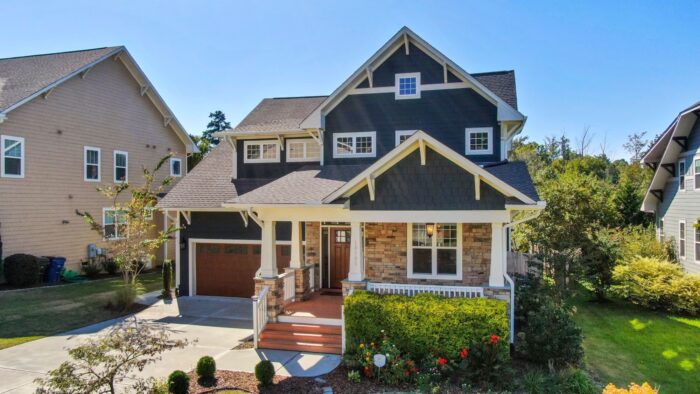
A modern Craftsman house combines timeless architectural character with low-maintenance durability. No single material or color defines this style of home. Instead, the style relies on a deliberate balance of warm color palettes, rich siding profiles and framed trim details.
Understanding how color, material and profile work together makes it easy to build authentic Craftsman curb appeal that stands up to heat, humidity and heavy weather over time.
The Anatomy of a Modern Craftsman Home: The 3-Layer System
Classic Craftsman homes are beloved for their rich, handcrafted detail, but traditional wood and masonry come with high maintenance.
Today, modern material innovations, like engineered aluminum trim, composite shakes and high-performance vinyl or steel siding, bring that iconic architectural look into the present day, giving you the same warmth and character without the constant upkeep.
Achieving this balance comes down to organizing your exterior into a simple, three-layer system:
- Layer 1: The Foundation (Color): Grounding the home with an inviting base color palette that sets the visual tone for the entire exterior.
- Layer 2: The Texture (Siding Profiles): Combining horizontal, vertical and shake profiles to guide the eye upward and highlight distinct architectural zones.
- Layer 3: The Frame (Trim & Accents): Crisp, low-maintenance trim and bold column wraps that tie every material together into one cohesive picture.
When these layers work together, your home achieves an aesthetic that can withstand the elements for decades. Here’s how to select and mix each element step-by-step:
1. Grounding the Design: Craftsman Color Palettes
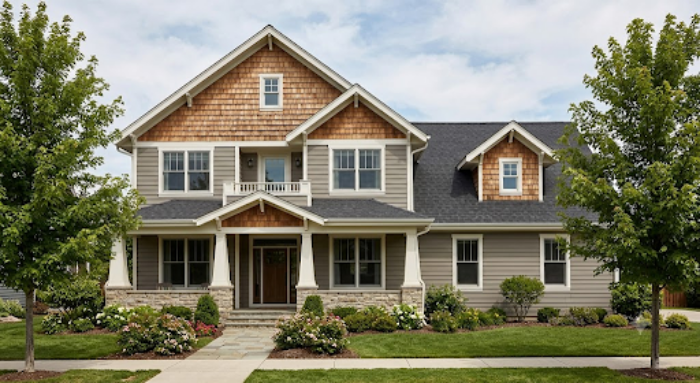
Color sets the foundation for a modern Craftsman exterior. Authentic designs usually feature a grounded primary body color paired with intentional accent tones that bring out the home's geometry.
Nature-Inspired Earth Tones
Warm taupes, muted sage greens, rich chocolate browns and soft off-whites honor the original roots of Craftsman architecture. These organic shades feel welcoming and connect seamlessly with natural surroundings.
High-Contrast White Trim
Bright white on window casings, fascia and porch railings creates crisp visual separation against mid-tone or dark siding, calling immediate attention to architectural craftsmanship.
Contemporary Slate & Charcoal
Darker trim, such as deep slate, charcoal or graphite, offers a sleek, modern twist. These deep hues anchor rooflines and columns, pairing exceptionally well with gray, blue or muted green siding.
2. Choosing Your Building Blocks: Materials & Profiles
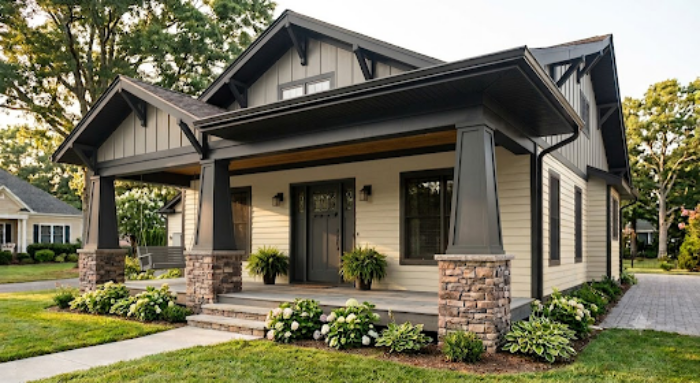
Once you have a color direction, selection shifts to the physical materials that give a Craftsman its iconic texture, depth and structural framing.
Siding Profiles
Lap Siding
Traditional horizontal siding, usually regular lap or Dutch lap, serves as the primary body profile. Its distinctive carved top edge creates deep shadow lines that give the lower stories a solid, grounded feel.
Board-and-Batten
Vertical siding panels with raised accent strips break up horizontal lines, adding height and dynamic contrast. Having gained popularity in recent years, board-and-batten has become a go-to accent for upper stories and gables to deliver a more current, elevated look.
Shake Accents
Modern materials, like durable vinyl and composite, offer the timeless look of cedar shakes without the maintenance of real wood. Available in staggered or straight-edge profiles, they add rich, hand-crafted texture to upper gables and dormers without requiring constant staining or sealing
Architectural Accents & Trim
Aluminum Trim & Fascia
Engineered aluminum trim, soffits and fascia frame the home with clean geometric lines while protecting vulnerable roof edges from rot, moisture and pest damage.
Aluminum Porch Wraps
Craftsman homes are anchored by their famed wide porches. Modern aluminum wraps fit over thick, tapered columns to deliver that heavy, handcrafted look without peeling paint or moisture damage.
Stone & Brick Bases
Masonry along the foundation or column piers ground the structure, adding weight and organic texture at eye level.
3. Putting It Together: How to Mix Profile, Trim and Colors
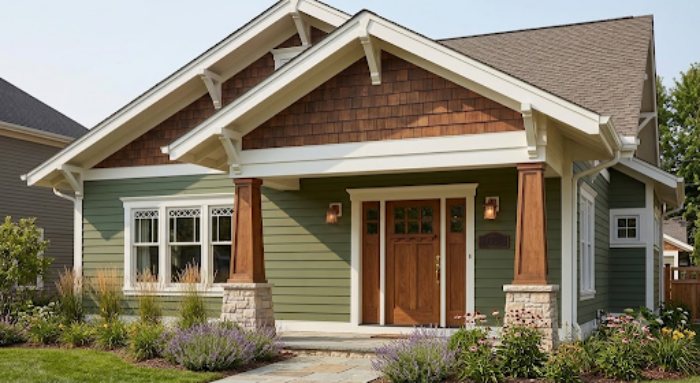
The secret to a standout modern Craftsman exterior comes down to balancing texture, scale and color.
While mixing too many patterns or harsh shades can feel chaotic, pairing the right siding profiles with intentional trim and color contrast creates a grounded, architecturally stunning home.
Transition at the Roofline
Use horizontal Dutch lap or regular lap siding across the main structure for stability, then switch to shake or board-and-batten on the gables to draw the eye upward.
Color Tip: Keep main body siding grounded with approachable neutrals like warm cream, greige or soft sage, then use a shade slightly lighter or darker for gable accents to make the texture pop without clashing.
Frame with Proportional Trim
Apply wide, color-blocked trim around windows, door transitions and fascia boards. Maintaining consistent trim width ensures distinct siding textures feel unified rather than mismatched.
Color Tip: High-contrast trim is the hallmark of modern Craftsman style. Crisp white trim offers a bright, traditional contrast while dark charcoal or bronze trim delivers a bold, contemporary edge.
Anchor the Porch Entry
Pair aluminum-wrapped columns with stone piers at the base. Aligning column trim with matching soffit and fascia colors unifies the entryway with the rest of the exterior.
Color Tip: Paint or finish column wraps in your primary trim color to frame the porch cleanly, and pull warmer, earthy accents from the stone or brick base to select your front door color.
Create a Beautiful Modern Craftsman House with Rollex
A captivating modern Craftsman strikes the ideal balance between classic architecture and long-lasting, low-maintenance materials.
By pairing the right colors with high-performance siding profiles and engineered trim, you can create a home that feels both authentic and current.
Ready to bring this look to life? Browse Rollex's siding and trim options to start planning your exterior, or contact the Rollex team today for expert guidance on your Craftsman-inspired project.